
How Substack Started Paying For My Rent
I thought I was building a newsletter. I was actually building a business.

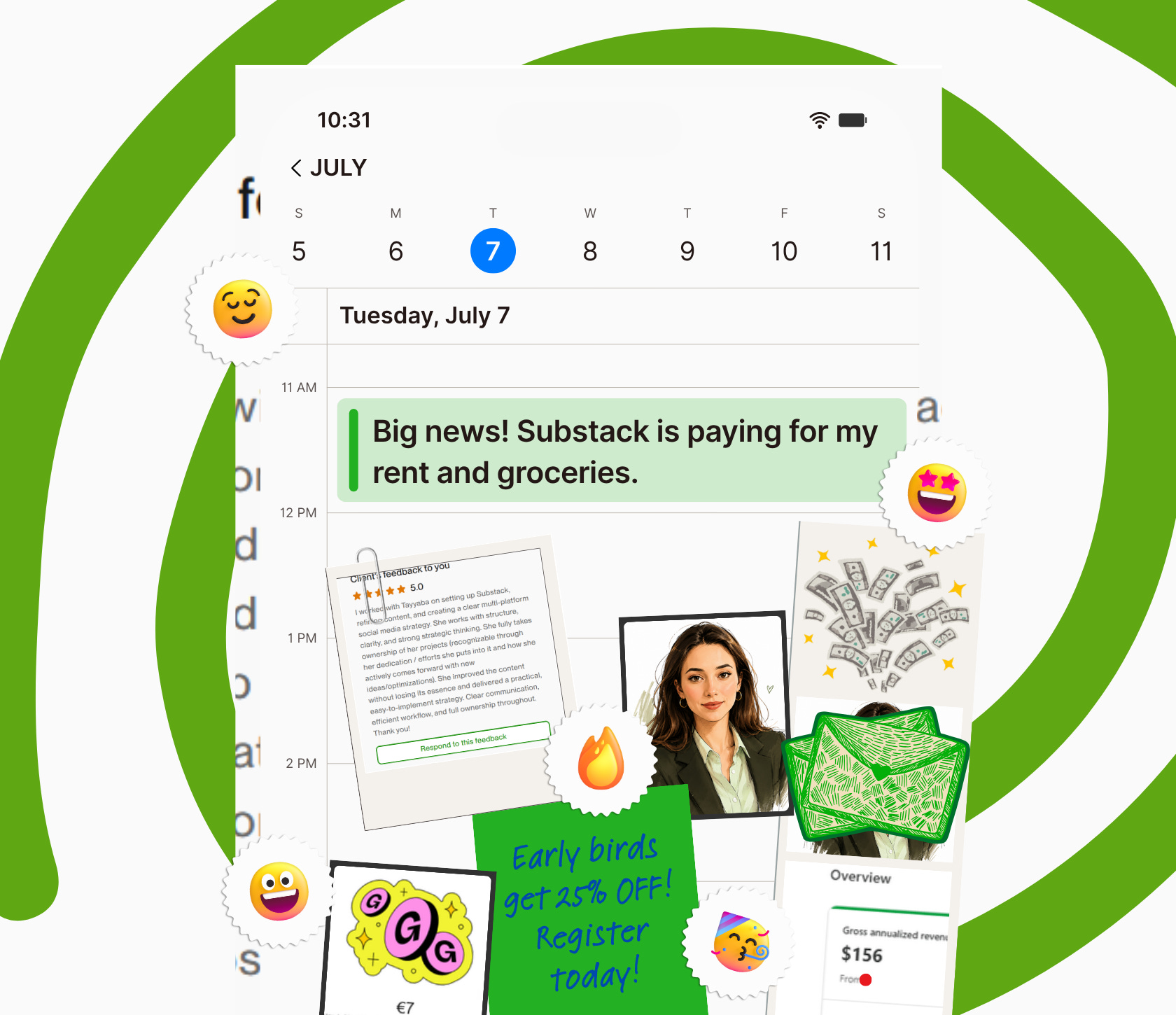
A few days ago, I posted a simple Note.
Substack is finally paying for my groceries and rent.
I thought a few people would like it, maybe a couple would congratulate me, and we’d all move on.
Instead, my notifications exploded.
Not because people cared about my rent, but because they wanted to know how.
Some assumed I had thousands of paid subscribers. Others asked if I had gone viral. A few wanted to know how many articles I’d published before making money. Some asked whether they should leave LinkedIn and move to Substack.
After reading those comments, I realized something. Most people aren’t confused about making money. They’re confused about where the money actually comes from.
So instead of replying to fifty comments with the same answer, I thought I’d write this article.
Not as an income report.
Not to convince you that Substack is the greatest platform on the internet.
Just to tell you exactly what happened during the last six months. Because the reality looks very different from what I imagined when I signed up.
Let’s start with the truth.
I didn’t join Substack because I wanted paid subscribers.
I didn’t even join because I wanted another social platform.
At that point, I was already working as a ghostwriter. I had clients, I knew how to write newsletters, and I was spending most of my days helping other people build their publications.
The strange part was that I had almost nothing under my own name.
Most of my best work belonged to clients.
Their newsletters grew.
Their audience grew.
Their businesses benefited.
Mine stayed invisible.
I remember thinking that if someone wanted to hire me tomorrow, where would they actually go to understand how I think?
A portfolio only shows finished work.
It doesn’t show your process.
It doesn’t show your opinions.
It doesn’t show the way you solve problems.
I wanted one place where people could spend time with my ideas before they ever sent me a message.
That’s why I opened a Substack account.
Not to make money.
To become visible.
Looking back, I think that single decision changed my business more than I realized at the time.
The first forty days
If you’re expecting a dramatic story, you’ll probably be disappointed.
Nothing magical happened.
I wasn’t gaining hundreds of subscribers every day.
I wasn’t writing articles that reached millions of people.
I wasn’t earning anything.
Most of my time was spent doing very ordinary things.
I published Notes.
I commented on other people’s work.
I replied to comments.
I sent direct messages.
I introduced myself to writers whose work I genuinely enjoyed.
I treated Substack less like a publishing platform and more like a community.
That part matters because many people arrive here with the same mindset they use on other platforms.
Publish.
Close the app.
Come back tomorrow.
That’s never how I used it.
Some of my best opportunities didn’t start with an article. They started with a conversation.
About forty days after joining, someone reached out and asked if I could help with their newsletter.
That project was worth $240.Financially, it wasn’t a huge milestone. Mentally, it changed everything. It proved something I hadn’t considered before. Someone had spent enough time reading my work to trust me with theirs.
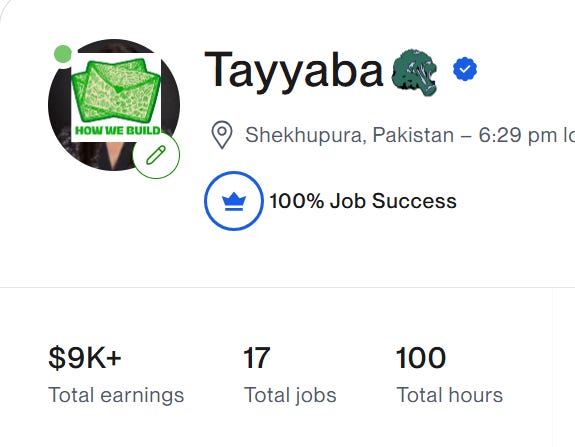
That wasn’t a paid subscriber, advertisement or a cold pitch. It was simply someone who had been quietly paying attention.
I still remember thinking,
“Maybe this platform isn’t just for publishing.”
Maybe it’s where trust gets built.
The biggest thing I misunderstood
When most people hear that someone is making money on Substack, they immediately think about paid subscriptions.
I did too. It’s the most visible business model on the platform.
Write.
Get subscribers.
Convert some of them to paid.
Earn recurring income.
There’s absolutely nothing wrong with that model. It works for thousands of writers. It just wasn’t the model that worked for me.
My business started growing in a completely different direction. People weren’t asking me where they could upgrade their subscription.
They were asking if I could write for them.
Or audit their newsletter.
Or help them build a publication from scratch.
Or jump on a strategy call.
That was the moment I stopped seeing Substack as a place to sell content. It became the place where people discovered my services. That distinction completely changed how I approached the platform.
I stopped asking,
“How do I make money from my newsletter?”
And started asking,
“How can my newsletter make the rest of my business stronger?”
That question is still shaping almost every decision I make today.
When Substack met Upwork
One thing I never expected was how naturally Substack and Upwork would start working together.
Most freelancers treat platforms like they’re competing with each other.
Should I focus on Upwork?
Should I focus on Substack?
I don’t think that’s the right question anymore.
Upwork is where contracts happen.
Substack is where trust happens.
For me, those two platforms began to complement each other.
Someone would discover my Notes, read an article, subscribe to my publication, reply to an email, or send me a DM. A few conversations later, they’d ask how we could work together. Some preferred working directly, while others felt more comfortable using Upwork. We opened a contract there and started working.
Substack didn’t replace Upwork. It made Upwork easier.
The sales conversation became shorter because people weren’t meeting me for the first time. They already knew what I did, how I thought, and what I believed about newsletters.
I didn’t have to spend the first thirty minutes convincing someone I knew what I was doing.
My writing had already done that.
Where the money actually came from
This is probably the question I received the most.
So here’s the honest answer.
The money didn’t come from one source.
It came from several small streams that slowly started connecting.
Paid subscribers
Ghostwriting
Newsletter strategy
Consulting calls
Ebook sales
Referrals
Monthly retainers
If I removed any one of those today, my business would still exist. That’s something I never had before.
When I first started freelancing, every month depended on finding the next client.
Today, new work comes from different directions:
Sometimes someone replies to a Note.
Sometimes an old client recommends me.
Sometimes a founder reads an article I published weeks ago.
Sometimes someone finds me on Upwork after already seeing my work on Substack.
No single source carries the entire business anymore.
I like that.
It’s a much calmer way to build.
The goal was never to make money from one platform. The goal was to build a business that isn’t dependent on one platform.
Publishing less. Connecting more.
Here’s another thing that usually surprises people:
I haven’t been publishing long-form articles every week. In fact, before writing this one, I’d only published one article in the last three months.
Most of my activity happened somewhere else.
Inside Notes.
Inside comments.
Inside conversations.
That’s where I spent my time. Looking back, I think I underestimated how powerful small interactions can become.
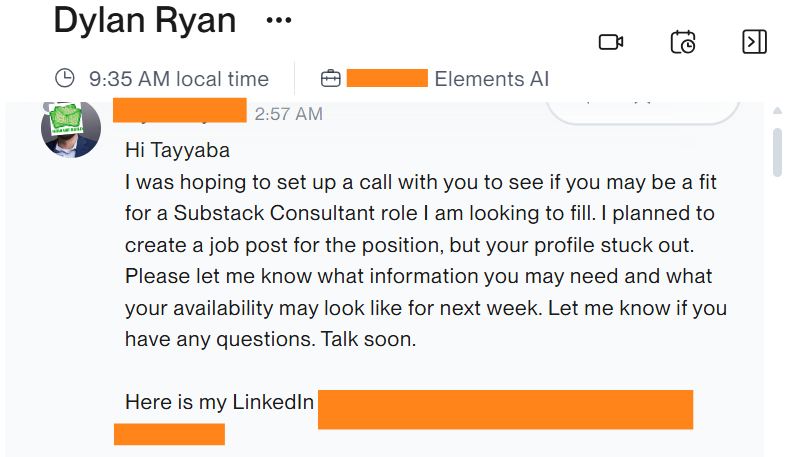
A thoughtful comment can turn into a conversation. A conversation can turn into a connection. A connection can turn into a client. That doesn’t happen every day.
But it happens often enough that I’ve stopped thinking of comments as engagement.
They’re relationships in their earliest form.
The biggest lesson from the last six months
If you’re trying to build your first $1,000 online, or even your first $5,000, I genuinely think a service-based business gives you the fastest path.
Not because it’s easy. Because you don’t need a huge audience.
You don’t need a viral post.
You don’t need thousands of paid subscribers.
You need one skill that solves a real problem for someone else.
For me, that skill became newsletter strategy and ghostwriting.
For someone else, it could be design, editing, video, software, research, sales, or something completely different.
The internet has never had a shortage of people willing to pay for good work.
The hard part isn’t finding money.
It’s becoming someone people trust enough to hire.
Substack helped me with that.
Not by magically sending clients into my inbox.
But by giving me one place to consistently show my work, my thinking, and the way I solve problems. Everything else grew from there.
Looking back...
Six months ago, I created a free Substack account without expecting much.
I certainly wasn’t thinking about rent.
Or groceries.
Or building a business around it.
Today, when I say that Substack helps pay for my everyday life, I’m not saying the platform handed me a paycheck.
I’m saying it introduced me to people I would have never met otherwise.
Some became readers.
Some became friends.
Some became clients.
A few became long-term partners. That’s the real value I’ve found here. And honestly, I think I’m just getting started.
One final thought
Six months ago, I had no idea this newsletter would become part of my business. I just wanted a place to write under my own name.
Today, it has introduced me to readers, clients, friendships, opportunities, and a business I’m genuinely excited to wake up and build every morning.
That’s why I’ll keep documenting everything here. The wins, the mistakes, the experiments, and the lessons along the way.
If you’re building alongside me, thank you for being here.
Want to build something similar?
I’ve recently opened GrowStack Community for writers, freelancers, ghostwriters, and service business owners who want to build a real online business through newsletters.
Inside, I’m sharing everything I’m learning while growing a one-person newsletter agency.
Client acquisition systems
Ghostwriting workflows
Newsletter strategy
Offers that actually sell
Pricing conversations
Templates and behind-the-scenes breakdowns
Live feedback and community support
If that sounds like something you’re working toward, I’d love to have you inside.
Next week’s article
One question kept coming back while writing this piece.
If a service-based business helped me turn Substack into a real income stream...
How do you actually build one?
That’s exactly what I’ll be writing next.
Not theory.
Not generic freelancing advice.
The real systems, offers, mistakes, pricing decisions, and client acquisition process I’ve used to build my own one-person business.
If that’s something you’re trying to build too, I think you’ll enjoy the next article.
See you next week.
Tayyaba
Thanks for this insight, looks like it worked well for you.
Amazing article for me.
Thanks for pouring your heart into this ♥️